Comparison
Fresh Fish Shop vs Saranda Restaurants: The Real Difference
The promenade in Saranda is lined with seafood restaurants — menus in four languages, grilled fish photos, waiters flagging tourists down. And behind that industry: a fish shop one street back where sea bream costs €6 a kilo instead of €22.
That gap exists everywhere in coastal tourist towns. In Saranda it is particularly stark because the fresh fish supply is excellent and the markup at tourist restaurants is unusually high.
What happens at a fish shop
At Fish Shop Ardit on Rruga Idriz Alidhima 230, the fish sits on crushed ice behind glass. You walk in, look at what arrived this morning, point to what you want. The fishmonger tells you the weight and price. You pay, you leave with clean, scaled fish.
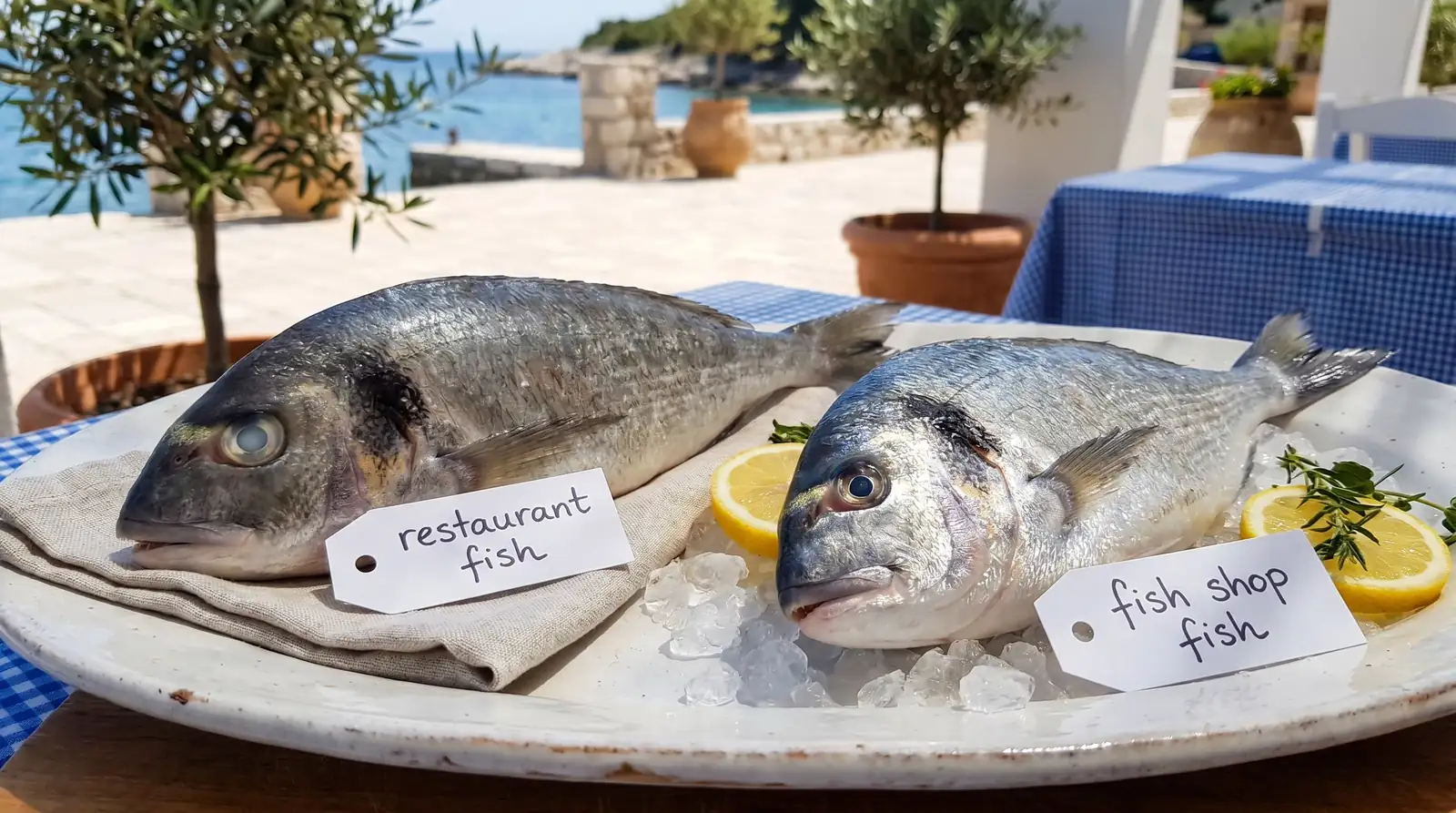
There is no ambiguity. You can see the eye of the fish — clear if fresh, cloudy if not. You smell sea air, not old fish. You are buying directly from someone who bought it off the boat.
What happens at a tourist restaurant
The chain of custody is longer. A restaurant buys wholesale, refrigerates for one to three days, and cooks when you order. The markup covers rent, staff, gas, and profit. Good restaurants do this honestly. Tourist-facing promenade restaurants often do it less honestly: older stock, higher price, less transparency.
The practical comparison
| Item | Fish Shop | Promenade Restaurant |
|---|---|---|
| 500g sea bream | ~300-450 ALL (~3 euro) | 16-22 euro/dish |
| Cleaning | Included, free | N/A |
| Age of fish | Landed this morning | 1-3 days typically |
| Transparency | You see it whole | Hidden behind menu |
Who eats at fish shops
Almost every local family in Saranda buys from a fish counter. They cook at home — on a grill, in a pan with olive oil and garlic, or baked. For visitors with villa or apartment access, the same option is available. The fish is better and significantly cheaper.
Rruga Idriz Alidhima 230, Sarande - Open every day 7:00 AM to 10:30 PM